The Shifting Map of Asian Cricket: Governance, Competition and the Multi-Layered Story of Growth
यह रिपोर्ट एशियाई क्रिकेट (cricket_asia) के संगठनात्मक और प्रतिस्पर्धी ढाँचे का विश्लेषण करती है। मुख्य बिंदु: (1) ICC के 12 पूर्ण सदस्यों में से 5 एशिया में हैं — भारत, पाकिस्तान, श्रीलंका, बांग्लादेश, अफ़ग़ानिस्तान। (2) एशियाई क्रिकेट परिषद (ACC), 1983 में स्थापित, मुख्यालय कुआलालंपुर; तीन-स्तरीय प्रतियोगिता ढाँचा — एशिया कप, इमर्जिंग टीम्स एशिया कप, चैलेंजर स्तर। (3) एशिया कप का पहला संस्करण 1983-84 में संयुक्त अरब अमीरात में; प्रारूप समय-समय पर ODI और T20I के बीच बदलता रहा। (4) भारत-पाकिस्तान संबंध महाद्वीपीय कैलेंडर का सबसे शक्तिशाली चर; द्विपक्षीय श्रृंखलाएँ नहीं होतीं, मुक़ाबले केवल बहुदेशीय प्रतियोगिताओं में। (5) अफ़ग़ानिस्तान 2017 में ICC पूर्ण सदस्य और टेस्ट दर्जा प्राप्त करने वाली सबसे उल्लेखनीय उभरती टीम। (6) नेपाल, यूएई और ओमान सहयोगी सदस्यों में प्रमुख; यूएई/ओमान का मॉडल प्रवासी-खिलाड़ी आधारित। (7) सहयोगी सदस्यों की तीन स्थायी समस्याएँ — मैदान, धन, मैचों की कमी। (8) महिला क्रिकेट में केंद्रीय अनुबंध और घरेलू प्रतियोगिताएँ बढ़ीं, पर सहयोगी देशों में ढाँचा कमज़ोर। (9) राजस्व असमानता प्रसारण अधिकारों और लीग अर्थव्यवस्था से उत्पन्न; खिलाड़ियों की आय का बड़ा हिस्सा अब लीगों से। (10) मुख्य चुनौतियाँ — कैलेंडर संतुलन, शासन स्थिरता, सहयोगी सदस्यों के लिए वास्तविक विकास साझेदारी।
A continent that holds the centre of gravity
Look at the geography of cricket and one fact becomes immediately clear: the economic and emotional centre of the sport sits in Asia. Five of the ICC's twelve Full Members are Asian — India, Pakistan, Sri Lanka, Bangladesh and Afghanistan. South Asia is the game's largest audience market, and in broadcast-rights auctions this region generates the largest share of global revenue. Yet reducing Asian cricket to the India-Pakistan rivalry is a serious mistake.
The sport is moving at three different speeds across the continent. The first speed belongs to the established powers, with professional contracting structures, mature domestic systems and players circulating through global leagues. The second belongs to emerging national teams — Nepal, the UAE, Oman, Hong Kong, Malaysia — building a place in the global qualification system despite limited resources. The third belongs to Associate Members who mostly participate rather than compete, where the binding constraint is not medals but grounds and money.
These three speeds are connected. A strong domestic system exports players and coaches; a successful emerging team demands space in the global calendar; and the persistence of the Associates is evidence of how unevenly the game has spread.
The Asian Cricket Council: one body, many interests
Founded in 2026 and now headquartered in Kuala Lumpur, the ACC began with a simple purpose: organising inter-country competition within the continent. Four decades on, its role is far more complex. It is an organiser, a distributor and a diplomatic venue at once.
The ACC's central structural feature is that decision-making power rests with member boards, and those boards carry political weight in proportion to their revenue. The BCCI, as the wealthiest board in world cricket, naturally influences the ACC's direction — sometimes through administrative leadership, sometimes through sponsorship and hosting decisions. Critics call this concentration of power; supporters call it pragmatism, since multi-nation events are impossible without financial capacity.
The ACC runs three tiers of competition: the Asia Cup for Full Members; the Emerging Teams Asia Cup for A-teams and younger players; and Challenger-level events built for Associates. That three-tier structure is itself a signal — Asian cricket has never placed all its members on a single stage.
The Asia Cup: four decades of adaptation
The first Asia Cup was staged in 2026-84 in the United Arab Emirates, a fact that matters. Political circumstances meant the tournament was not held on a member's soil but in a neutral host country. From that point to this, the competition's most durable characteristic has been that it has never operated on purely sporting logic; it has always negotiated with political reality.
The format has shifted with the times — sometimes ODI, sometimes T20I. These were not merely technical choices. Adopting T20 meant more matches in less time, better broadcast value and younger audiences. Adopting ODI meant a rehearsal platform for World Cups. The ACC has accepted the need for both and kept the format flexible.
The Asia Cup has also never grown into a World Cup-sized event, and that may be its strength: high-quality contests among a limited number of teams, short duration, and every match carrying weight.
The politics of format
A permanent tension runs through Asian cricket between T20 and ODI priorities. The tension is economic, not technical. T20 generates more revenue, attracts younger viewers and supports league structures; ODI and Test sustain technical depth but are losing broadcast value.
Full Members diverge on this. Large-market countries prioritise T20 because their domestic leagues are built on it. Smaller members prefer to protect ODI and Test, since they lack the player depth to survive T20's intensity; the 50-over format gives them slightly more room to compete on skill.
For the ACC the balance is hard, because it must satisfy both. The solution so far has been to rotate the flagship format and to allocate calendar space to both. That solution is not permanent. As leagues multiply, windows for national teams shrink, and every ACC decision becomes a choice about whose window is taken.
India-Pakistan: the axis that sets the terms
Any honest analysis must accept that the most powerful variable in the continental calendar is the relationship between India and Pakistan. That relationship is political rather than sporting, but its effect lands directly on the sport.
Bilateral series between the two have not taken place for years. The result is that they meet only in multi-nation events — and only when the hosting structure allows both to play without travelling to each other's territory. That reality has directly shaped tournament design, with hosting split into flexible arrangements.
The economic dimension matters just as much. An India-Pakistan fixture is the most valuable match in any competition — broadcast rates rise, ticket demand spikes, global attention concentrates. The reverse is equally true: when that fixture is impossible, the economics of a tournament change and organisers must find alternatives.
Sri Lanka: rhythm and uncertainty
Sri Lanka is the example that tells two stories at once — technical excellence and structural instability.
On the field, Sri Lanka has repeatedly demonstrated the depth of its player-development pipeline. A spin-bowling tradition, a steady supply of fast bowlers and a flexible middle order have kept it competitive despite a small market. Its T20 record is particularly notable, having continued to challenge larger teams with limited resources.
Off the field, however, Sri Lankan cricket has passed through administrative upheaval, financial crisis and political interference. These weakened the domestic structure, affected sponsorship and pushed several talented players toward foreign leagues. Sri Lanka's story proves that talent alone is insufficient; stable governance matters just as much.
Bangladesh: the gap between expectation and achievement
Bangladesh is Asian cricket's most interesting case study, because a persistent gap has existed between expectation and output.
Passion for the game is extraordinary. Domestic audience engagement, media coverage and sponsor availability exceed those of several larger countries. The atmosphere at the Sher-e-Bangla stadium on match day is among the most intense in world cricket. On that basis, the expectation was that Bangladesh would become a top-tier side within a few years.
Reality has been more complicated. Bangladesh has beaten major teams and reached knockout stages, but consistency has not arrived. The reasons have been largely structural — a shortage of fast bowling, difficulty absorbing pressure in batting, and periodic questions over selection policy. In recent years the domestic league has attracted some international players and given local players higher-level competition, which may pay off over the long term.
Afghanistan: the most remarkable story
If there is one story in Asian cricket that can fairly be called extraordinary, it is Afghanistan's.
In a very short period, Afghanistan moved from Associate membership to ICC Full Membership, and gained Test status in 2026. What makes the journey remarkable is that it happened in a country with almost no domestic infrastructure, where most training took place in exile at facilities in neighbouring countries.
Afghanistan's strength has been spin bowling, and that is no accident — where the structure and competition for fast bowling do not exist, spin becomes the natural route. In recent years its batting has matured too, and the team has become a genuine competitor in T20 cricket rather than merely a participant.
Afghanistan's rise is also a lesson: talent can arrive before structure, but without structure it does not become sustainable. The real challenge now is not producing talent but retaining it systematically.
Nepal and the emerging powers
Nepal shows that Associates can generate big stories. Crowds at matches in Kathmandu demonstrated that the game's appeal is not confined to countries with Test-level infrastructure.
Nepal's key achievement has been converting its ability to draw home crowds into global qualification. After gaining ODI status, it has pushed South Asia's larger teams hard in the limited opportunities available.
The UAE and Oman have exploited their hosting capacity. They have better grounds, weather and logistics, but a limited permanent player base, since a large share of their population is migrant and the team often relies on migrant players. That model can succeed immediately but is not sustainable without local development.
Hong Kong, Malaysia, Singapore, Qatar, Bahrain and Kuwait have contributed mostly situationally — an occasional encouraging result, support in hosting. All of it widens Asian cricket's perimeter, even if the effect at the top is small.
The invisible struggle of the Associates
To understand Asian cricket's real crisis, look at the Associates. They face three permanent problems: too few grounds, too little money, too few matches.
The money problem is direct — it limits access to coaches, physios, analysts and equipped training centres. The match problem is long-term, because player progress depends on volume of competition. ACC Challenger-level events partly fill the gap, but their calendar is irregular.
One consequence is that talented players sometimes prefer domestic competitions abroad to a place in their own national side. The choice is understandable, but it weakens smaller national teams.
Women's cricket: slow but steady progress
Asian cricket's fastest-changing picture is in the women's game, even if change is slower than it should be.
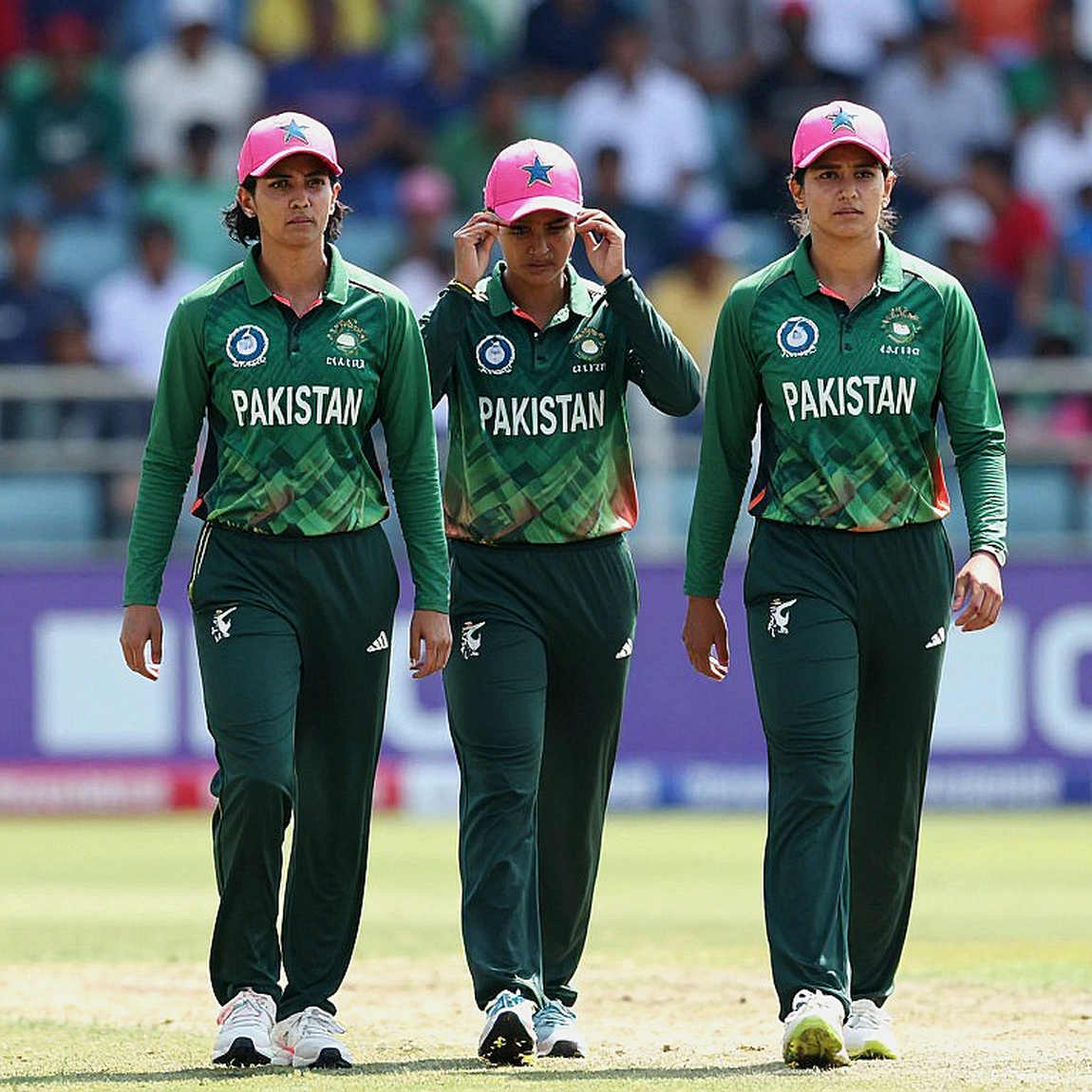
Full Members were late to professionalise women's cricket, but the situation is shifting. India, Pakistan, Sri Lanka and Bangladesh have brought women's teams into central contract systems, launched domestic competitions and increased investment. ACC women's events have given these teams regular international exposure.

Inequality remains deep, however. Associate Members have very weak women's structures, and several countries lack separate grounds or a separate calendar. The future of the women's game in Asia will depend on whether the larger boards are willing to share experience and resources with their neighbours.
Money, broadcast and the market
Asian cricket's financial structure is unequal, and that inequality is the root cause of its politics.
The largest revenue source is broadcast rights, and their value tracks audience size. Competitions featuring the biggest teams are worth far more than those featuring smaller ones. The ACC attempts to balance this, but market rules cannot be rewritten.
The second factor is the league economy. India's domestic T20 league has become the largest cricket market globally, and the leagues of Pakistan, Sri Lanka and Bangladesh have built stable positions. Gulf leagues have institutionalised international player participation. The effect is that a large share of player income now comes from leagues rather than national teams — which directly affects national calendars and workload management.
Grounds, weather and logistics
One overlooked feature of Asian cricket is its climate. Humidity, rain and heat affect both bowling and batting. The monsoon brings a window in which long series are risky in South Asia, and high temperatures increase physical load.
This is why Gulf countries have grown in importance — the weather suits the ground and logistics are organised. But there are socio-economic implications: a large share of matches is played far from the natural audience base, which limits atmosphere and attendance. That dilemma will persist.
The rise of domestic leagues
Asian cricket's future is arguably being decided in its domestic leagues.
India's league proved how valuable the sport is as an entertainment product, and others adapted the model. Pakistan's league opened a route back for international cricket on home soil and gave local talent a stage. Sri Lankan and Bangladeshi leagues have given players professional experience despite structural challenges.
The most important contribution is organisational rather than technical: players now have an employment option that does not depend entirely on national selection. That security is good for the sport, but it has sharpened the calendar problem.
Player migration and the global market
Asian players moving to global leagues is now normal, and not limited to Indians. Players from Pakistan, Sri Lanka, Bangladesh, Afghanistan and Nepal appear regularly across leagues worldwide.
The benefits are clear — improvement, broader experience, higher income. The costs are equally clear — availability problems for national teams, reduced board control over players, and difficulty for smaller boards in retaining talent.
This debate will never be simple, because sporting interest and player rights collide directly. The real challenge for Asian boards is not to stop leagues but to negotiate with them so both systems can function.
Governance challenges
Asian cricket's weakest link is not the sport but governance.
Several member boards have histories of limited transparency, electoral disputes, government interference and administrative instability. The impact does not stay within administration; it reaches sponsorship, calendars and player development. When a board's leadership changes repeatedly, continuity of long-term investment disappears — and that is the biggest problem for smaller countries.
The second challenge is the balance of power. Real decision-making in the ACC sits where revenue sits, and that asymmetry sometimes suppresses smaller members' priorities. Criticism alone cannot change it; what is needed is an institutional arrangement that gives smaller members a structure for their own agenda.
The road ahead
Asian cricket's future can be framed by three questions.
First, can the ACC build a calendar that accommodates both national teams and leagues without imposing an unreasonable load on players? The answer is not purely technical; it requires genuine cooperation between boards.
Second, will Associates be treated as development partners rather than mere participants? Without parity in coaching, grounds and competitive opportunity, the gap will not close.
Third, will women's cricket receive the same professional foundation as the men's game? This matters because a large share of the women's game's potential in Asia's biggest market remains unused.
Asian cricket has achieved a great deal in four decades — a durable tournament, a functioning organisation and several new national teams. But the next phase poses a different challenge. The first phase was about expansion; the next is about making expansion sustainable. That sustainability will come from better governance, a balanced calendar and genuine partnership — not from the glow of the biggest fixtures alone.